
COMMERCIAL REFRIGERATION
Underbench, Prep & Display Fridge Service & Repair
Professional Commercial Fridge Repairs & Preventative Maintenance
ARC licensed AU066274
QBCC 15418651
24/7 emergency callouts
WHAT WE DO
Commercial Fridge Repairs and Maintenance
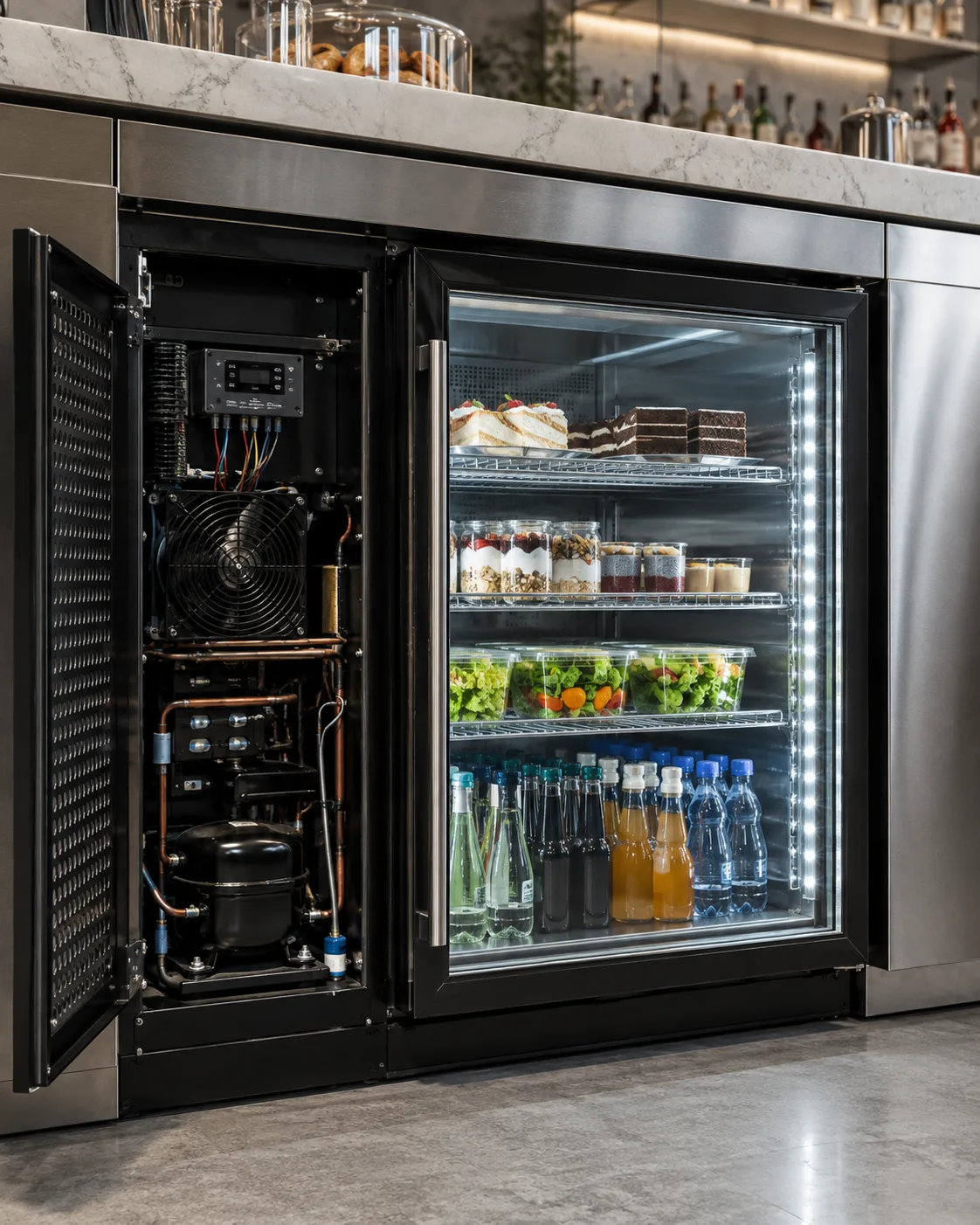
Underbench fridges, prep fridges and refrigerated display cabinets are designed for continuous commercial use and often operate in demanding environments with frequent door openings, high ambient temperatures and heavy daily workloads.
Skiva Technologies provides professional diagnostics, repair and preventative maintenance for commercial underbench refrigeration, prep fridges and refrigerated display cabinets.
Whether your fridge is not reaching temperature, running continuously, icing up, leaking water or has stopped completely, we can diagnose the fault and carry out the required repair or service.
WARNING SIGNS
What Your Fridge Is Telling You
Commercial fridges often continue operating even when performance has started to deteriorate. Recognising the early symptoms can help prevent complete equipment failure and potential product loss.
Fridge Not Reaching Temperature
If the cabinet cannot reach or maintain the set temperature, possible causes include a dirty condenser, restricted airflow, refrigerant problems, evaporator icing, faulty fans, sensors, controllers or compressor problems.
Temperature Fluctuations
Temperature moving significantly above and below the normal range may indicate control, sensor, airflow, defrost or refrigeration system problems.
Fridge Running Continuously
The system cannot shed enough heat. Dirty coils, poor ventilation, worn door seals, icing or a refrigeration fault.
Ice Build-Up Inside the Cabinet or Evaporator
Excess ice blocks airflow and cuts capacity. Defrost faults, blocked drainage, sensors, fans or door seals letting moisture in.
Water Leaking From the Fridge
Water underneath or inside the cabinet may be caused by a blocked drain, defrost issue, damaged drain components or excessive ice formation.
Compressor Starting and Stopping Frequently
Frequent short cycling may indicate temperature control problems, condenser issues, electrical faults, compressor protection operation or other refrigeration system problems.
Unusual Noise or Vibration
New or excessive noise can indicate worn fan motors, loose components, compressor problems or other mechanical faults.
Fridge Has Stopped Working
Complete failure can be caused by electrical components, controllers, sensors, compressor problems or refrigeration system faults and should be properly diagnosed before components are replaced.
SERVICE AND REPAIR
What We Repair
Refrigeration, defrost, drainage and the doors all have to work together for a cabinet to hold temperature. We diagnose and repair each of them.
Refrigeration system
- Fault finding and diagnostics
- Refrigeration system repairs
- Refrigerant leak detection and repair
- Refrigerant recovery and charging
Compressor and coils
- Compressor diagnosis and replacement
- Condenser cleaning and repair
- Evaporator repairs
- Condenser and evaporator fan replacement
Defrost, drainage and doors
- Defrost system diagnosis and repair
- Drainage repairs
- Door seal inspection and replacement
Controls and electrical
- Temperature controller replacement
- Temperature sensor and probe replacement
- Electrical fault finding
- Preventative maintenance
A worn door seal does not look like a fault. It looks like a compressor that never stops.
Warm air leaking past a perished seal is heat the system has to remove again, every hour of every day. It is the cheapest part on the cabinet and the one most often left alone.
Reasonable interval between preventative services on a commercial fridge or display cabinet
PREVENTATIVE MAINTENANCE
Service It Every Three to Six Months
ommercial underbench, prep and display fridges should be maintained regularly because they often operate continuously in environments where condensers can quickly become contaminated with dust, grease and debris.
For most commercial refrigeration equipment, preventative maintenance every 3–6 months is a reasonable general recommendation.
Equipment installed in busy commercial kitchens or other demanding environments may require more frequent condenser cleaning and servicing.
Regular maintenance helps maintain stable temperatures, identify developing faults and reduce the risk of unexpected breakdowns.
What we check during a service
- Condenser inspection and cleaning
- Evaporator condition and icing
- Condenser and evaporator fan operation
- Compressor operation
- Cabinet temperature and airflow
- Temperature controller, sensors and probes
- Defrost operation
- Drainage system
- Door seals and door operation
- Electrical components and connections
- Refrigeration system condition and leak signs
- Noise, vibration and overall performance
RUNNING COSTS
A Dirty Condenser Is a Longer Compressor Run
Maintenance affects the efficiency of a commercial fridge more than almost anything else you can control.
Heat has nowhere to go
A dirty or blocked condenser cannot reject heat, so the compressor runs longer to hold the same temperature.
The load keeps climbing
Perished door seals, iced evaporators, restricted airflow and failing fans all add to it.
Clean runs cheaper
A clean system operating correctly cuts unnecessary run time and the wear that comes with it.
FAQS
Commercial Fridge Questions
What kitchen and venue managers ask us most often about underbench, prep and display fridges.
For most commercial underbench, prep and display fridges, preventative maintenance every 3–6 months is a good general guideline. Equipment operating in busy kitchens or environments where condensers become dirty quickly may require more frequent servicing.
Common causes include a dirty condenser, poor airflow, refrigerant loss, evaporator icing, faulty fans, temperature sensors, controllers, damaged door seals or compressor problems. Proper diagnosis is required to identify the actual fault.
Continuous operation usually means the refrigeration system is working harder than normal to maintain temperature. Dirty condensers, damaged door seals, restricted airflow, icing and refrigeration faults can all increase compressor run time and electricity consumption.
Ice build-up may be caused by defrost problems, faulty sensors, blocked drainage, fan problems, damaged door seals or excessive warm and humid air entering the cabinet.
A blocked or damaged drain is a common cause, but water leakage can also result from evaporator icing, defrost problems or damaged drainage components.
Yes. Dirty condensers, restricted airflow, damaged door seals and other faults can force the compressor to run longer than necessary. Regular cleaning and maintenance help the refrigeration system operate more efficiently and reduce unnecessary energy consumption.
GET IT HOLDING TEMPERATURE
Need Commercial Fridge Service or Repair?
If your underbench fridge, prep fridge or display cabinet is not holding temperature, has stopped working or is due for preventative maintenance, talk to Skiva Technologies.