
COMMERCIAL REFRIGERATION
Milk Cooler Service & Repair
Diagnostics, repairs and preventative maintenance for commercial milk cooling systems and milk storage tanks across Brisbane, the Gold Coast and the Sunshine Coast.
ARC licensed AU066274
QBCC 15418651
24/7 emergency callouts
WHAT WE DO
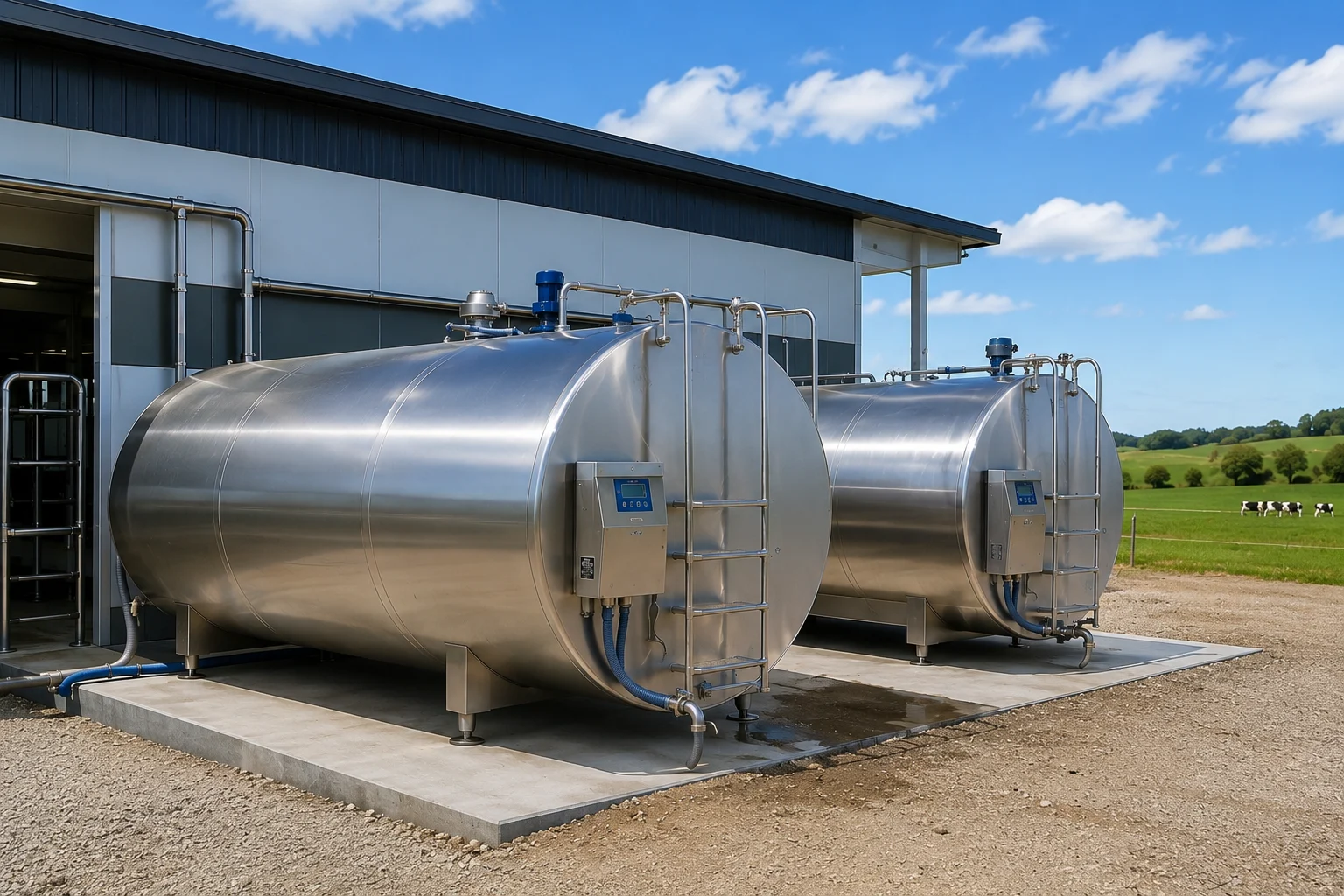
Milk Cooling System Repairs and Maintenance
Commercial milk coolers are designed to rapidly reduce and maintain milk temperature while operating reliably under changing product loads.
Skiva Technologies provides professional diagnostics, repair and preventative maintenance for commercial milk cooling systems and milk storage tanks.
Whether your milk cooler is taking too long to reach temperature, struggling to maintain the set temperature, running continuously or has stopped cooling completely, we can diagnose the fault and carry out the required repair or service.
WARNING SIGNS
What Your Milk Cooler Is Telling You
Milk cooling problems should be investigated early. A system may continue operating even when its cooling capacity has already started to deteriorate.
Milk Taking Too Long to Cool
A noticeable increase in cooling time is one of the clearest signs that the refrigeration system is no longer performing correctly.
Possible causes include dirty condensers, restricted airflow, refrigerant problems, compressor issues or reduced heat transfer.
Milk Not Reaching Set Temperature
If the system runs but cannot achieve the required temperature, the refrigeration system may have insufficient cooling capacity or a fault with the temperature control system.
Temperature Fluctuations
Unstable milk temperature can indicate problems with temperature sensors, controllers, refrigeration performance or agitation.
Refrigeration System Running Continuously
A system that continues running for unusually long periods may be struggling to remove heat effectively.
This can increase electricity consumption and place additional stress on the compressor and other refrigeration components.
Compressor Frequently Starting and Stopping
Frequent cycling can indicate temperature control problems, electrical faults, condenser issues or problems within the refrigeration system.
Agitator Not Operating Correctly
Incorrect or failed agitation can affect temperature distribution throughout the milk tank and may result in inconsistent temperature readings or cooling performance.
Unusual Noise or Vibration
New or excessive noise may indicate problems with the compressor, condenser fan, agitator motor or other mechanical components.
Milk Cooler Has Stopped Cooling
Complete loss of cooling can result from electrical, control, compressor or refrigeration system faults and requires proper diagnosis before components are replaced.
SERVICE AND REPAIR
What We Repair
A milk cooler is a refrigeration system, a control system and an agitator working together. We diagnose and repair all three.
Refrigeration system
- Fault finding and diagnostics
- Refrigeration system repairs
- Refrigerant leak detection and repair
- Refrigerant recovery and charging
Compressor and condenser
- Compressor diagnosis and replacement
- Condenser cleaning and repair
- Condenser fan diagnosis and replacement
Temperature control
- Temperature controller repairs
- Temperature sensor and probe replacement
- Control system diagnosis
- Agitator operation checks
Electrical and performance
- Electrical fault finding
- Refrigeration performance checks
- Preventative maintenance
Warm milk hits the tank and the refrigeration system has minutes, not hours, to pull it down.
That first pull-down is the hardest work a milk cooler does, and it is where a tired condenser or a slipping compressor shows up first.
Reasonable interval between preventative services on a commercial milk cooling system
PREVENTATIVE MAINTENANCE
Service It Every Three to Six Months
Milk cooling equipment operates under significant load, particularly immediately after warm milk enters the tank and the refrigeration system must rapidly remove heat.
For most commercial milk cooling systems, preventative maintenance every 3–6 months is a reasonable general guideline.
The appropriate frequency depends on operating hours, product load, environmental conditions and how quickly the condenser becomes contaminated.
Regular servicing helps maintain cooling capacity, stable temperature control and reliable operation while identifying developing faults before they result in a breakdown.
What we check during a service
- Condenser condition and cleaning
- Condenser fan operation
- Compressor operation
- Refrigeration system condition
- Refrigerant pressures and leak signs
- Cooling performance and pull-down time
- Product temperature control
- Temperature controller operation
- Temperature sensors and probes
- Agitator operation
- Electrical components and connections
- System controls, noise and vibration
RUNNING COSTS
Slow Cooling Shows Up on the Power Bill
Heat transfer matters more on a milk cooler than on most equipment: a lot of heat has to leave the product in a short window.
A dirty condenser
Restricted airflow and a failing fan stretch out the time needed to bring the milk down.
Longer cooling cycles
More run time on the compressor is more electricity, every single collection.
A maintained system
Holds its pull-down time, keeps the set point steady and stops the compressor working for nothing.
FAQS
Milk Cooler Questions
What operators ask us most often about milk cooling systems.
For most commercial milk cooling systems, preventative refrigeration maintenance every 3–6 months is a good general guideline. Equipment operating under heavy load or in demanding environments may require more frequent servicing.
Longer cooling times can be caused by dirty condensers, poor airflow, refrigerant problems, compressor deterioration or other faults reducing refrigeration capacity.
The refrigeration system may be struggling to remove enough heat to reach the set temperature. Dirty condensers, restricted airflow and refrigeration faults can increase compressor run time and electricity consumption.
Temperature fluctuations may be related to temperature sensors, controllers, agitation or inconsistent refrigeration performance.
Yes. A milk cooler with reduced heat-transfer efficiency has to operate for longer to achieve the required temperature. Keeping the condenser clean and the refrigeration system operating correctly can reduce unnecessary compressor run time and energy consumption.
Yes. We diagnose and repair refrigeration, electrical and temperature-control faults in commercial milk cooling systems, including compressor, condenser, fan, controller and refrigerant-related problems.
GET IT BACK ON TEMPERATURE
Need Milk Cooler Service or Repair?
If your milk cooler is taking too long to cool, cannot hold temperature or is due for preventative maintenance, talk to Skiva Technologies.